

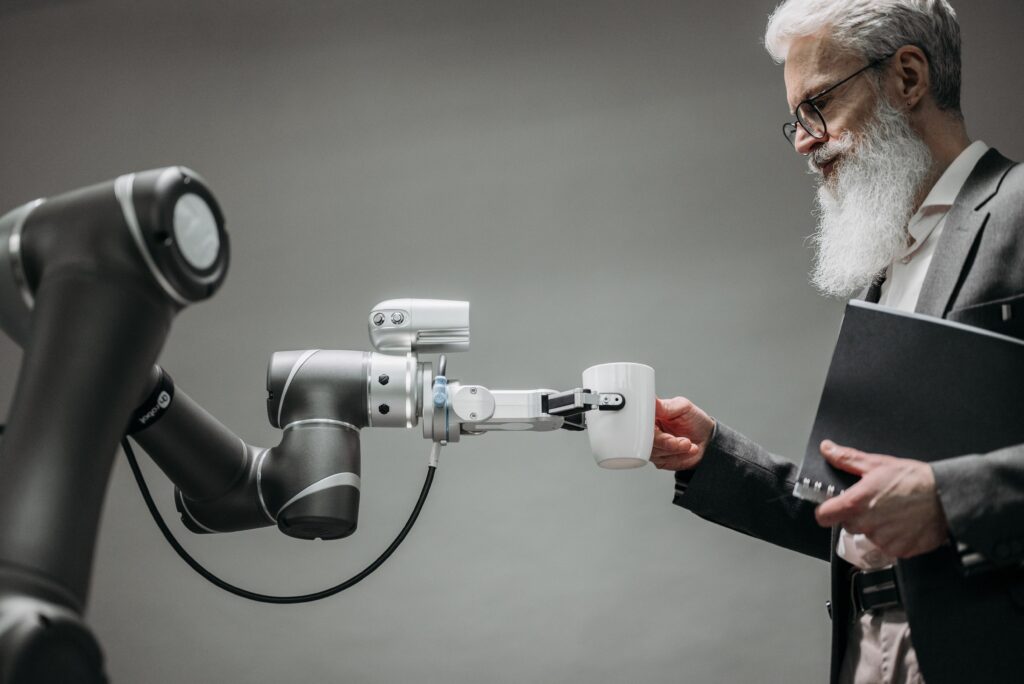
I’ve noticed a trend recently at all of the conferences I’ve attended. Conversations are centered around the latest and greatest tech the world has ever seen: AI.
The environmentalist in me is screaming about the water usage at these massive data centers that this big tech boom has built: an infrastructure our planet and societies can barely handle.
And yet it is here to stay. Similar to social media and the impact I see it having on the teens, I’ve found AI to be a larger part of the anti-critical think movement. I’ve worked in education for over a decade, and something that alarms me is how kids are no longer reading anymore. Their writing has declined rapidly over the seven years I have been a dedicated college counselor. And even though AI is a relatively recent mainstream phenomenon, it coincides with the social media scrolling. We aren’t reading anymore. We aren’t thinking anymore.
Just because we have AI, does that mean we should use it so willingly and blindly? Should we be uploading information of individuals without consent? Do we understand the different forms and capacities of AI, or do we default to Chat GPT or Gemini or Claude? Are we even critically thinking, or just bypassing thought and written word to AI for convenience?
As a small business owner and college education planner, I am constantly bombarded with the saying “You will become obsolete if you do not bite into the AI trend now.” This is usually told to me by someone much older than me, with twenty to thirty years of college counseling experience under their belt. First, I usually smile because I find it humorous that someone might lecture me on AI use who might not even understand basic technology (mine extends to python coding in GIS). And my response is maybe I will regret my decision not to go full AI in my college counseling practice. But then, I think of all the dedicated work I’ve done.
Families hire me because I’ve visited over 70 college campuses: which started with waking up early every Saturday morning to pick up rainbow bagels and driving a red van full of teens to different campuses in my home state of Massachusetts. Families hire me because I’ve spent countless time and energy going to conferences, taking UCLA and UC Irvine Extension college counseling courses, and even sometimes because I have lived and studied in another country, and fundamentally understand multilingual and multicultural nuances. Families hire me because I am passionate and empathetic to what teenagers face today, from the intense desire for a safe bet major or college or career, to the anxiety of a future unknown. I meet kids where they are, something I learned as a teacher. I build confidence and teach teens how to build skills that will allow them to be successful in life beyond high school. Yet, most families hire me because of my life experience from going to the wrong college to choosing the wrong major, and being able to share some big sister wisdom and insight into the stressful college application process. Something that AI will never be able to replicate.
As educators, let’s lead by example. Let’s teach kids it is not about the easy or most efficient way out. Let’s instead encourage them to get out into the world and make mistakes.
Is there a place for AI? I guess so. But the fact that every conversation with universities or college counseling seems to center around teaching kids to be AI literate does sort of alarm me. We need to teach kids how to think, not how to prompt. We need to teach kids the interdisciplinary connections of our complex world, rather than one dimensional problem solving.
What are your thoughts on AI and how do you currently use it in your practice or work?