

Your Future Has No Borders
The world’s best education isn’t confined to one country. Whether you are based in Boston, Singapore, or London, I’ll help you navigate higher education pathways and apply to colleges in the UK and Europe.
Why Attend College Abroad?
Most parents don’t realize that some of the universities in the UK and Europe are more accessible and more affordable. The best part is? There are many programs that offer Bachelor programs fully taught in English.
Students who study internationally don’t just get a degree. They acquire fluency — in a new culture, a new way of thinking, a new version of themselves. They graduate as global citizens, with networks, perspectives, and confidence that simply can’t be built in a classroom close to home.
– Former Student at IE University in Madrid, Spain
Why Work with Me?
What You'll Receive
I know what it feels like to move to another country and step into the unknown. I also know the educational systems, the international applications, the academic programs, the universities, and the nuances of each country’s academic culture, inside and out.
I didn’t plan to build my career around international education. But after graduating college, on a leap of faith, I moved to Spain. This is when my life started to change. I fell in love with teaching, and saw the direct impact I could make on the students I worked with. Suddenly, I felt like I had found a path for myself and a home away from home in the bustling heart of Spain. I applied to do a Master’s in Education, worked in the Spanish school system as an English and science teacher, designed curriculum, and found a fulfilling community. That experience is the foundation of everything I bring to my students.
With over 13 years of international education experience, I bring a deep understanding of different cultures, knowledge, and perspective into my practice advising students on college admissions. As an independent educational consultant who specializes in international admissions, I help families find universities in the US, Europe, and UK. I try to open doors so students can have options and be flexible. Here are some of the things I assist teens and parents with:
– Finding the best academic course of study that aligns with a student’s profile
– Learning about entry requirements for course-specific applications
– Comparing costs across different countries

GLOBAL EXPERTISE
In-depth knowledge of universities worldwide, from the UK to Spain to the Netherlands, not focused on rankings, but real fit.

PERSONALIZED GUIDANCE
Advice tailored to each student’s academic strengths, personal interests, and long term aspirations, never a one-size-fits-all approach.

CONTINUOUS SUPPORT
From the first conversation to the first day abroad, and beyond, because the transition doesn’t end at acceptance.
Is Pursuing an International Degree the Right Fit for Your Teen?
Choosing to pursue a bachelor’s degree in another country is one of the most exciting and most personal decisions a student can make. It’s not right for everyone, and that’s okay. Before we talk about the next steps, take a moment to ask your teen these questions…
Do you feel a pull toward something beyond the familiar? Not restlessness, but a genuine curiosity. A sense that there’s a version of your life waiting to be discovered somewhere you’ve never been. Students who flourish abroad aren’t necessarily the most fearless ones. They’re the ones willing to feel uncomfortable and keep going anyway.
Do you have a sense of what you want to study? Many universities in the UK and Europe have you apply directly to a specific program. You don’t need to have everything figured out, but students who are pursuing an international education generally have a subject that lights them up, a field they keep coming back to, a specific course or program they would like to study. If you’re still deeply uncertain, that’s not a dealbreaker, but it’s something we’d want to explore together first.
Do you learn well with greater independence? International universities often place more responsibility on the student with fewer check ins, longer stretches between exams, more self directed reading and research. It’s a style of learning that suits some students beautifully. Think about how you do your best work. Do you rise when given ownership over your own education?
Are you open to a different kind of academic experience? Universities abroad are structured differently than American schools, often more focused, more immersive, more specialized from day one. Are you a flexible learner and able to attend large lectures to intake information? Can you navigate more intimate academic discussions with your smaller tutorials? Are you an independent learner?
Are you drawn to the experience itself, not just the price tag? International education can be more affordable than you’d expect, and that’s worth knowing. But cost alone is rarely enough to sustain you through the harder moments of living abroad. What matters is whether you want the culture, the challenge, the growth.
How We'll Work Together
1
Start with a conversation. Tell me your student’s goals, interests, academic background — and hesitations. I’ll listen first, then build a personalized plan around what I hear.
2
Find the best fit. Based on your teen’s profile and aspirations, I’ll identify the universities and programs where they’ll most likely to thrive academically, socially, and personally.
3
Build out applications. From essays to required documents, I’ll guide your student through every step, making sure their application reflects not just their achievements, but who they are.
4
Make the leap with support. Acceptance is just the beginning. I stay with your child through the transition, helping them arrive abroad ready, not just enrolled.
Popular Destinations for College Abroad
Every country offers something different. Here’s a quick look at what draws students to each one.
United Kingdom
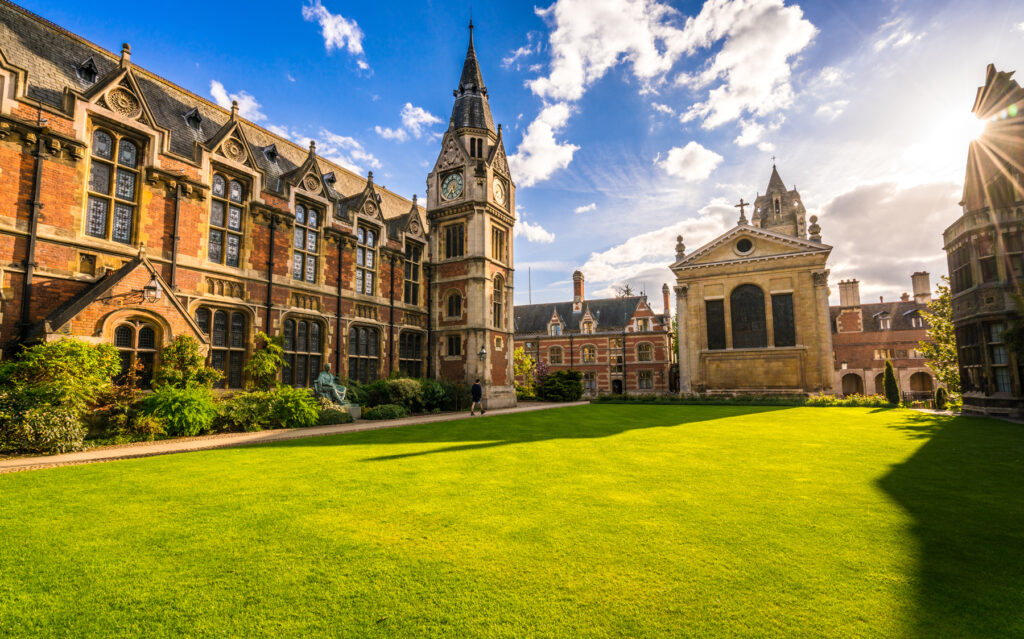
The UK is where most families start when they think about studying abroad, and for good reason. UK universities use a centralized application system called UCAS, and students apply directly to a specific subject rather than as undecided. Undergraduate degrees are three years rather than four, which surprises most American families. Whether you are applying to a Russell Group university or an ancient university, I’ll help you develop a global college list with UK options.
Canada
Canada is one of the most accessible international options for American students, familiar in culture and sometimes language, but genuinely world-class in its universities. The four-year degree structure mirrors the US system, making the transition straightforward. It’s a particularly strong option for students who want an international experience without straying too far from home. Canadian higher education often emphasizes co-op programs, making it a wonderful abroad opportunity for students leaning into obtaining real work experience.

Ireland
Ireland Ireland is one of the most underrated destinations for US students, and one I find myself recommending more and more. It’s English-speaking, deeply welcoming to Americans, and home to universities with strong academic reputations that don’t yet carry the same name recognition as their UK counterparts, which can actually work in a student’s favor during admissions. The cultural experience is rich, the country is beautiful, and EU access opens doors for students with longer term global ambitions.

Scotland
Scotland deserves to be considered separately from the rest of the UK, and not just because of its distinct culture. Scottish universities offer a four-year undergraduate degree, which feels more familiar to American students than the three-year English model. The University of Edinburgh and St Andrews are world-renowned, but Scotland’s university system as a whole is strong and worth exploring carefully.

Netherlands
The Netherlands has quietly become one of Europe’s most international study destinations. A significant number of programs are taught entirely in English, making it genuinely accessible to American students without requiring fluency in Dutch. It’s particularly strong in engineering and technical disciplines, and Dutch universities bring a pragmatic, research-driven approach to learning that suits independent, intellectually curious students. There are also University Colleges which offer a smaller, liberal arts college experience for the right student.

Germany
Germany is an exceptional option for students drawn to engineering, technology, and the sciences. Many programs at German universities are taught in English, and tuition costs are remarkably low compared to the US. It rewards students who are self directed and academically serious, and a degree from a strong German institution carries real weight globally.

Spain
Spain is an evolving destination for international students. The number of English-taught programs at Spanish universities has grown significantly, opening the country up to students who are drawn to the culture and lifestyle but aren’t yet fluent in the language. For students interested in learning in a vibrant culture filled with a balance of student life and travel, Spain is a great destination.

My deepest expertise is in UK and European admissions. For other destinations, I work closely with a network of specialist consultants to make sure every student gets the most accurate, up-to-date guidance available.
Discover where your teen belongs
FAQs
Absolutely, and more successfully than most people realize. Many international universities actively recruit American students and have dedicated admissions pathways for them. The process is different from applying to US colleges, but with the right guidance it's very possible to apply and enroll in a university abroad.
In the US, students are reviewed holistically, meaning admissions reps look at both the academic profile of applicants alongside their essays, activities, and letters of recommendation. International universities are much more focused on a merit review, meaning they look at test scores like SAT, ACT, and AP exams, GPA, and evidence that you are interested in pursuing your major. Another large difference is that students apply into a specific academic program, rather than into the school itself. Each country and university has its own guidelines and deadlines for applications, which is why it is crucial to stay organized throughout the process.
Frequently it is more affordable to obtain a bachelor’s or master’s degree outside of the US than in the US. Tuition can be upwards of $85k per year for families. Paid across 4 years, that can equal nearly $340,000. International degrees are often more affordable because of the shorter degree length (many bachelor programs are 3 years and many master’s are 1 year), subsidized costs by the government, and universities being seen as a public investment instead of a private one. In the UK, degrees range from £15,000 – £40,000 per year, Canada is averaged at around CAD $41,700 per year, Australia AUD $55,000, while some European countries like Germany have free tuition at their public institutions (you pay a small €150–€350 fee).
UK universities use a centralized application system called UCAS, through which you can apply to only five universities. Most programs are subject specific, meaning you apply directly to a major (known as a course in the UK) rather than as an undecided student. Applications typically open in the fall for entry the following September. You’ll select your five universities, complete the UCAS application, and write a personal statement. The big difference in applications is how the personal statement is written, but how references work. In the UK, your reference will input predicted grades into the UCAS, which are highly important. These grades are what you are expected to obtain in AP courses the following year.
Families usually start exploring international options in their junior year. When I work with students, I like to get to know them well and understand their academic strengths, their intellectual curiosities, and where they would best fit in. I recommend exploring potential areas of study and countries you would be interested in studying in, alongside working with an experienced expert from IECA or HECA.
This is normal. Being a teenager with limited real world experience, most kids arguably do not know what they want to study in college. This is why I’ve developed a thoughtful series of questions that reflect on what a student loves learning about coupled with what they are good at learning about. Because international applications are to specific academic programs, it is important to discuss what your child might want to study. Some students arrive with a clear direction; others need help finding it. Either way, I won't push forward with applications until we’ve explored a genuine sense of fit, academically and personally, together.
Yes, increasingly so. In the globalized world we live in, degrees from international universities are recognized and respected by employers worldwide. In many fields, an international degree is a differentiator. Students also return with cross-cultural fluency, independence, and confidence that sets them apart in any job market.
It starts with a free consultation, a real conversation rather than a sales pitch. From there, if it feels like a good fit on both sides, we build a personalized roadmap together: identifying potential courses (majors) of study, exploring programs in different countries, preparing applications, outlining letters of motivation, and supporting your student all the way through their first steps abroad.